
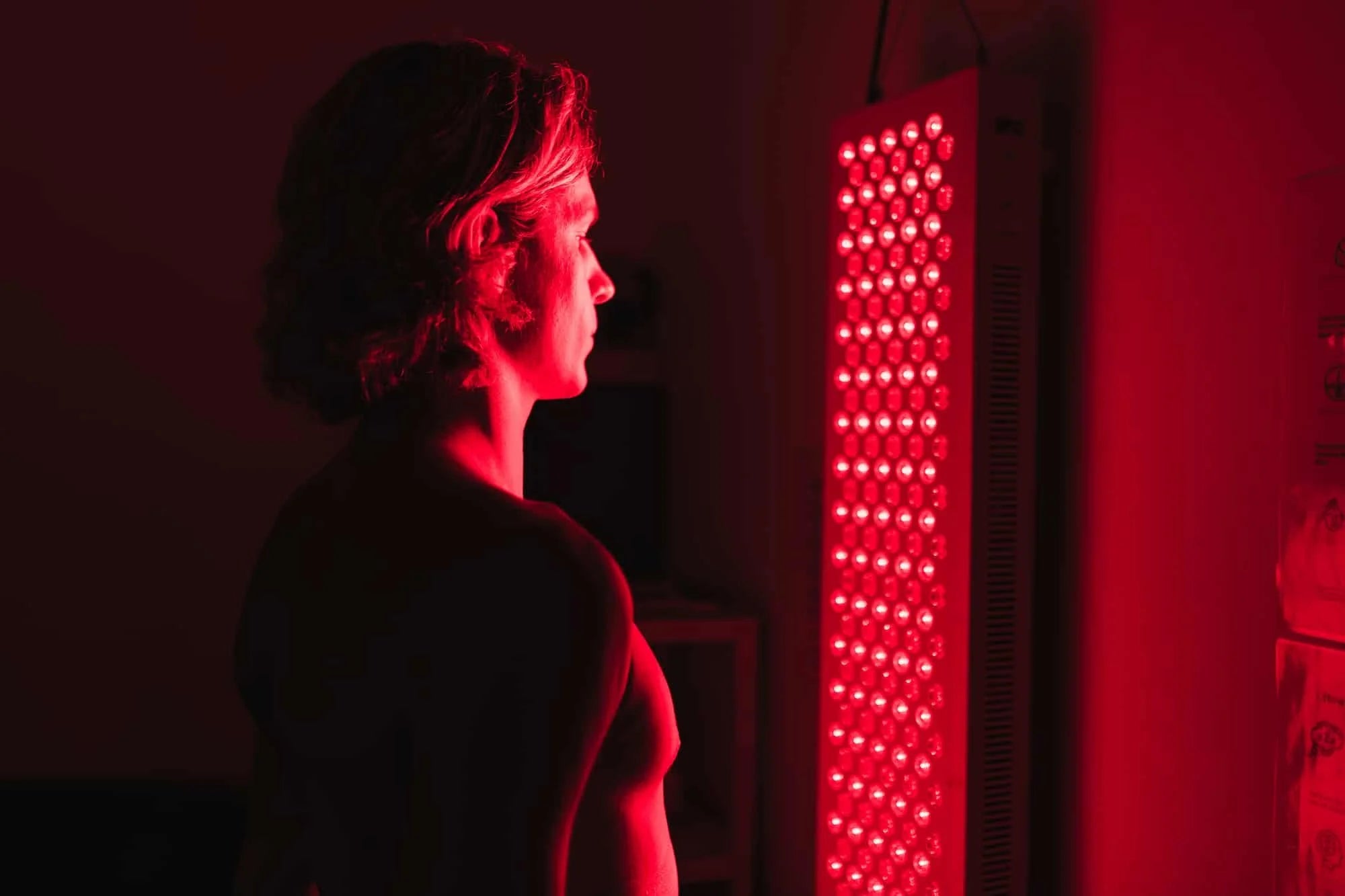
Why light is the missing nutrient
The science of red light.
No hype. Here is how it works, what the research actually shows, and what it cannot do.
Light your cells can use
Inside almost every cell in your body are mitochondria. Think of them as tiny power stations: they turn the food you eat and the oxygen you breathe into energy your body runs on.
Here is the interesting part. The power stations have a component (an enzyme called cytochrome c oxidase) that absorbs particular colours of red and near-infrared light. When it does, studies show cells can produce energy more efficiently. More cellular energy supports the things your body already does: repairing tissue, managing inflammation, building collagen, circulating blood.
That is really the whole trick. Red light therapy does not add anything foreign to your body. It gives your cells more of a resource they already use.
Why the colour of light matters
Light behaves differently depending on its wavelength, measured in nanometres (nm).
Short wavelengths like blue stop at the skin's surface. Longer red wavelengths reach through the skin. Near-infrared, which your eyes cannot even see, passes through skin and muscle into deeper tissue.
One wavelength cannot do every job. That is why all our panels have a minimum of 6 running at once with our Pro range running all nine.
Blue light works at the very surface of the skin, where it is studied for helping manage blemish-causing bacteria and supporting clearer-looking skin.
Amber light reaches the upper skin layers, where it supports circulation in fine capillaries and is studied for skin tone and lymphatic support.
Classic red light. Reaches the full depth of the skin, where it is studied for supporting collagen production and smoother-looking skin.
The most-studied red wavelength. Reaches the base of the skin and the tissue just beneath it, supporting recovery and skin health together.
A close sibling of 660nm with research around cellular energy production (your mitochondria) and eye-area skin.
Near-infrared light you cannot see. Passes through skin into muscle and connective tissue, studied for nerve and joint support.
Near-infrared studied for post-exercise recovery and deeper tissue support.
The most common near-infrared wavelength in research on muscle recovery, joint comfort, and performance.
The deepest-penetrating wavelength in a home panel, reaching deep muscle, tendon, and bone-adjacent tissue. Rarely found even in premium devices.
What published research shows
Every claim on this site traces back to a published study. Here are the key ones, in plain English.
Light therapy after intense exercise
Why it matters: Post-exercise soreness is the most common reason people fall off a training routine.
Key findings: Participants receiving red and near-infrared light reported reduced soreness and better strength recovery than controls.
Read the study →Review of light therapy and muscular performance
Why it matters: Reviews compile many trials at once, giving a more reliable picture than any single study.
Key findings: Reported improved muscular performance and faster recovery across the included trials.
Read the study →Light therapy for knee osteoarthritis
Why it matters: Knee comfort is one of the most-studied areas in all of photobiomodulation research.
Key findings: Reported reduced pain and improved joint function in osteoarthritis patients.
Read the study →Light therapy in rheumatoid arthritis
Why it matters: Tests the technology against an inflammatory joint condition, a much harder target.
Key findings: Reported reduced pain and morning stiffness compared with control.
Read the study →Light therapy for chronic low back pain
Why it matters: Chronic low back pain is common, stubborn, and expensive to treat.
Key findings: Reported meaningful improvement in pain and mobility with light therapy.
Read the study →Controlled trial of red light for skin
Why it matters: Used objective measurement of collagen density, not just self-reported results.
Key findings: Reported improved skin texture and measured increases in collagen density.
Read the study →Two honest caveats. First, studies vary in size and quality, and light therapy is not a magic fix. Second, results in studies came from consistent use over weeks, not a single session. We link the sources so you can judge them yourself. Institutions including NASA and Harvard have also published accessible overviews of this field.
What to expect, week by week

Building the habit
Sessions feel warm and relaxing. Any change is subtle. This phase is about consistency, 4 to 5 sessions a week.

First signals
This is when study participants most often report change: easier recovery after exercise, less end-of-day stiffness, skin looking slightly fresher.

The compounding phase
Benefits in the research are tied to ongoing use. Keep the routine and reassess monthly. If you feel nothing by week 8 with consistent use, it may not be for you, and our trial exists for exactly that reason.
Safety, honestly
Red light at these intensities is generally considered low-risk, and sessions are non-invasive with no downtime. Still, be sensible. Wear the included eye protection and do not stare into the LEDs. Skip it if you are pregnant, have epilepsy or a photosensitive skin condition, or have an implanted electronic device such as a pacemaker, unless your doctor says otherwise. If you take medication that increases light sensitivity, check with your GP first. More light is not more benefit: stick to 10 to 20 minutes per area.
Find the Right Panel
Same light engine in every panel. You are only choosing coverage.
| Specification |
most popular
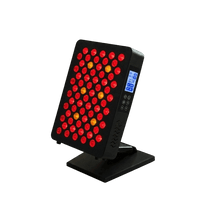
Mini
 |
 |
 |
 |
 |
 |
|---|---|---|---|---|---|---|
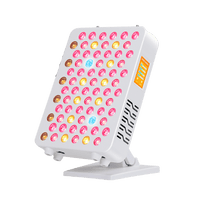
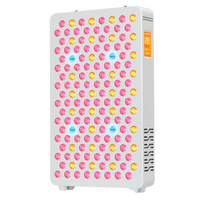
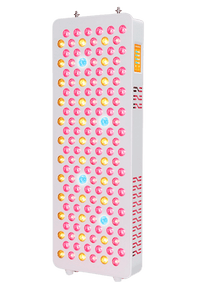
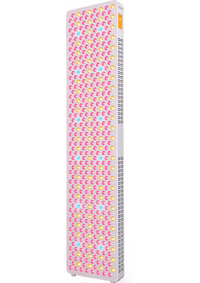
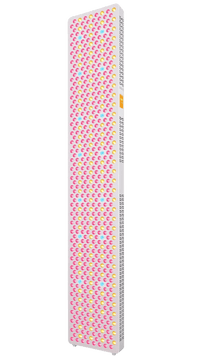
| LED count | 70 | 72 | 144 | 288 | 432 | 576 |
| Size | 31 x 22 cm | 32 x 23 cm | 48 x 30 cm | 92 x 30 cm | 136 x 30 cm | 182 x 30 cm |
| Power | 120W ±10% | 120W ±10% | 240W ±10% | 480W ±10% | 720W ±10% | 960W ±10% |
| Irradiance (15cm) | ≥140 mW/cm² | ≥155 mW/cm² | ≥163 mW/cm² | ≥171 mW/cm² | ≥185 mW/cm² | ≥190 mW/cm² |
| Best for | Targeted area | Targeted area | Half body | Most of body | Full body | Full body, any height |
| Stand options | Tabletop or hang | Tabletop or hang | Optional stand | Optional stand | Optional stand | Optional stand |
| Price | $349.00 | $824.95 | $1,399.90 | $2,199.90 | $2,999.90 | $3,999.90 |
| View panel | View panel | View panel | View panel | View panel | View panel |
Questions
Common questions about the science
How does red light therapy work?
Your cells contain mitochondria, the parts that produce energy. Specific wavelengths of red and near-infrared light are absorbed there and are studied for supporting energy production, circulation and the body's own repair processes.
Why do 9 wavelengths matter?
Different wavelengths stop at different depths. A 2-wavelength panel treats skin and some muscle. The Pro Panel range runs 9 wavelengths at once, from 480nm at the skin surface to 1060nm reaching deep muscle and bone-adjacent tissue, so every layer gets covered in one session.
What is 1060nm and why does it matter?
It is the deepest-penetrating near-infrared wavelength available in a home panel, going beyond the standard 810-850nm range into tendons, fascia and deeper tissue. It is rarely included even in premium devices.
How often should I use it, and when will I notice something?
10 to 20 minutes per area, 4 to 5 times a week. Daily use is fine. Most consistent users in studies report noticeable change within 2 to 4 weeks.
Who should not use it?
Not recommended during pregnancy, for people with epilepsy or photosensitive skin conditions, or anyone with an implanted electronic device such as a pacemaker. Talk to your GP first if you have an active medical condition. Wear the included eye protection.
RecovrLab products are wellness devices intended for general wellbeing use. They are not intended to diagnose, treat, cure, or prevent any disease or medical condition. Information on this site is general education and is not medical advice. Consult your GP before use if you have a medical condition, are pregnant, have epilepsy or photosensitivity, or use an implanted electronic device.